

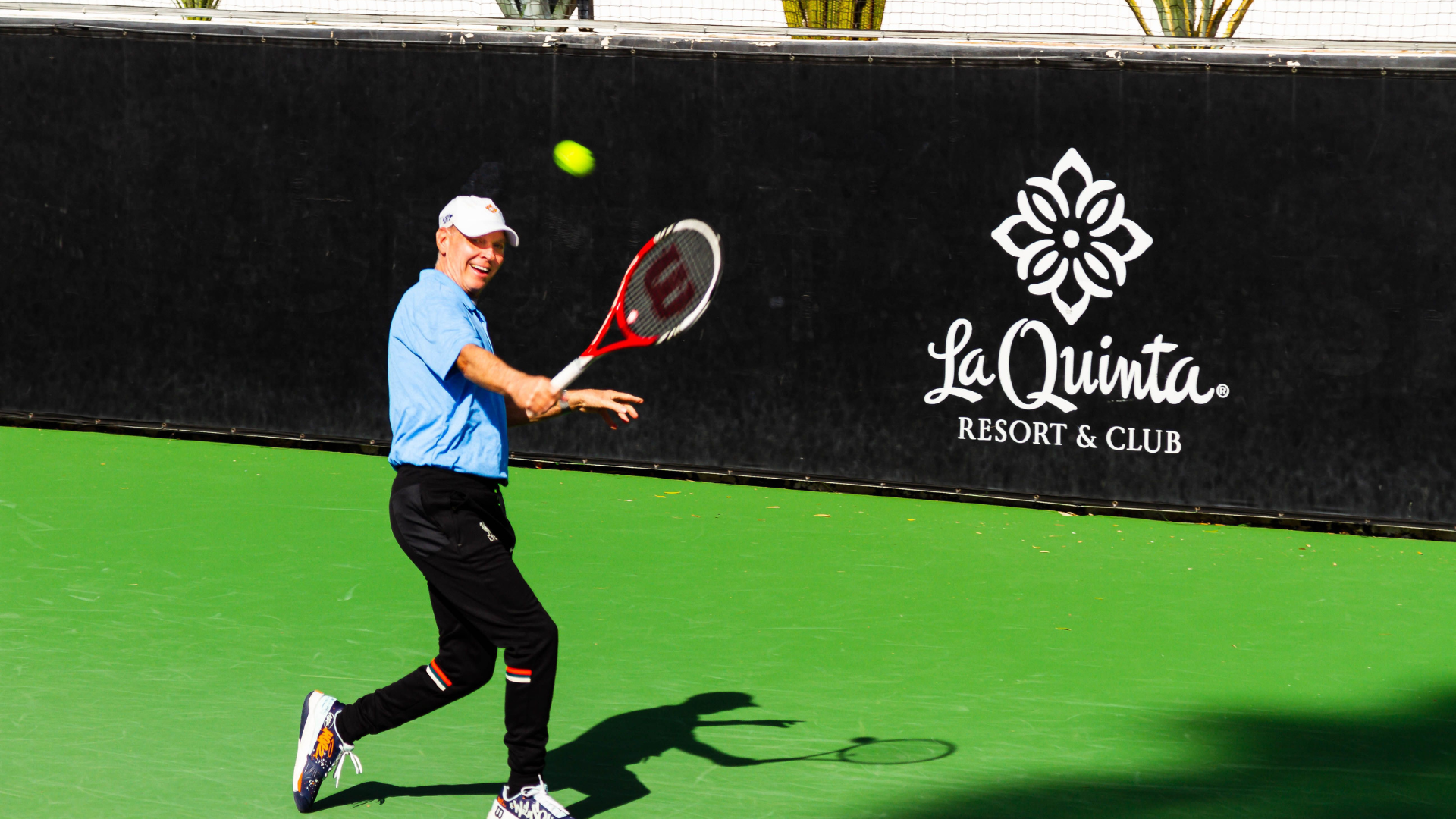
By Kevin Connolly, Director of Tennis, La Quinta Resort & Club
Tennis and pickleball are more than enjoyable ways to stay active. Both sports encourage natural movement patterns that help build strength, improve balance, and support healthy joints. Unlike exercises that repeat the same motion, such as walking or running, racket sports challenge the body to move in every direction, engaging muscles from head to toe while improving coordination and stability.
Stronger Support for Every Step
Every match includes side-to-side movement, quick changes of direction, and short bursts of speed that activate muscles surrounding the knees, ankles, hips, and core. This variety helps strengthen the body’s stabilizing muscles while reducing the repetitive stress that can come from performing the same movement over and over.
“Dynamic movement uses many different muscle groups that help build strength throughout the lower body,” says Kevin Connolly, Director of Tennis at La Quinta Resort & Club. “Interval running is also a great off-court exercise because it mimics the quick starts and stops that happen during tennis.”
Lighter Footwork, Less Impact
Proper movement on the court plays an important role in protecting the body. Staying light on the feet allows players to absorb impact more efficiently while maintaining good posture helps transfer force through the hips and legs instead of placing unnecessary stress on the lower back.
“The more players can stay light on their feet and keep their heels off the ground, the less jarring impact they experience,” Connolly says. “Jumping rope is one of the best ways to develop quick footwork, rhythm, and balance.”
Better Balance Beyond the Court
The same movements used to chase down a shot or recover for the next rally help improve dynamic balance, which is the body’s ability to remain stable while moving. Those skills naturally carry into everyday activities, whether walking on uneven ground, climbing stairs, hiking, or simply reacting more confidently to unexpected movements.
“The same skills that help you recover after a wide forehand carry over surprisingly well into everyday life,” Connolly explains. “They improve balance while moving, strengthen stabilizing muscles, enhance coordination, and help reduce the risk of falls.”
Staying Flexible as the Years Go By
One of the greatest benefits of tennis and pickleball is that they can be enjoyed throughout every stage of life. Consistent movement helps maintain flexibility, encourages healthy joint motion, and keeps muscles active.
“Even playing 30 to 60 minutes a day helps keep the body flexible,” Connolly says. “Stretching after play is especially beneficial because the muscles are warm and more pliable. Consistent movement helps reduce stiffness and keeps the body ready for activity.”
Two Sports, One Goal
While tennis and pickleball each challenge the body differently, they complement one another remarkably well. Tennis develops powerful rotational strength through larger, more explosive swings, while pickleball emphasizes quick reactions, fast hands, and precise control around the net. Together, both sports improve mobility, coordination, and athletic movement that extends well beyond the court.
“Tennis helps pickleball, and pickleball helps tennis,” Connolly says. “Any racket sport will improve mobility, hand-eye coordination, and overall racket or paddle skills.”
Whether picking up a racket for the first time or returning to the court after years away, tennis and pickleball provide an enjoyable way to stay active while supporting strength, balance, flexibility, and healthy movement for years to come.